


Views: 4 Author: Site Editor Publish Time: 2026-04-29 Origin: Site
In the hardware sector, the most devastating financial errors rarely occur during the initial design phase. Instead, they materialize after the assembly lines have already started. When enterprises rush directly from a digital concept to a massive steel mold, they expose themselves to catastrophic sunk costs. To truly avoid manufacturing mistakes before mass production, leading engineering teams utilize a strategic, phased approach.
By inserting a crucial validation step between prototyping and full-scale runs, companies can expose design flaws, verify market demand, and refine assembly protocols. Here is an in-depth look at how integrating small-batch validation serves as the ultimate commercial insurance policy against mass-production disasters.
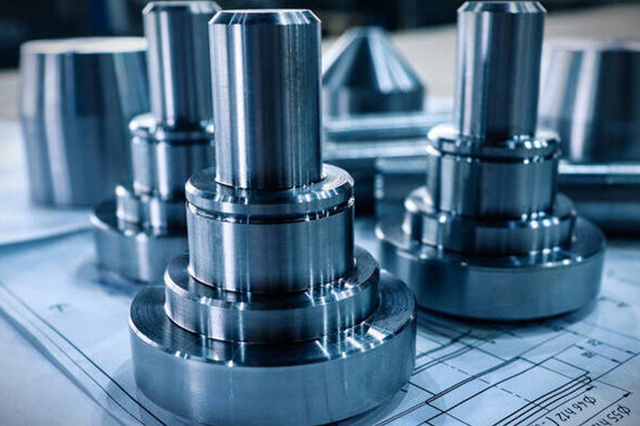
Procurement teams frequently focus entirely on securing the lowest per-unit cost, overlooking the massive financial penalty of an unverified design. The goal of early-stage manufacturing is not cost optimization; it is the absolute prevention of late-stage errors.
The financial data surrounding new product introductions highlights the danger of premature scaling:
High Tooling Expenditures: Standard injection molds require a rigid upfront investment ranging from $3,000 to over $100,000.
The Penalty of Late Modifications: Making a design change after mass production tooling is cut costs 5 to 20 times more than modifying a CAD file during the low-volume stage.
Market Failure Rates: Historically, 60% to 80% of new hardware products fail to meet market expectations upon initial launch.
The core realization for product teams is that the most expensive line item is not the manufacturing cost itself, but the "cost of the error." A warehouse full of unsellable inventory or a $50,000 mold that requires scrapping represents a total loss of capital.
Navigating the prototype to production transition requires recognizing the distinct limitations of a single prototype. A beautifully 3D-printed model proves that a design is conceptually feasible, but it obscures three critical manufacturing blind spots:
Unverified Manufacturability: A design that works as a single resin print may suffer from severe tolerance stack-up issues when machined or molded in batches of 100.
Predictive Market Fallacies: Forecasting demand based on surveys or digital renders is highly inaccurate compared to placing functional units into the hands of real users.
Rigid Supply Chains: Once mass production is initiated, altering components to fix unforeseen assembly bottlenecks incurs extreme downtime and adjustment costs.
Rather than viewing small batches as inefficient production runs, successful enterprises view them as risk-control tools. Utilizing low volume manufacturing benefits the entire project lifecycle by intentionally shifting the discovery of errors to a phase where they are cheap to fix.
The strategy relies on small batch production for testing (typically 50 to 500 units) to validate physical assembly and market appetite. By utilizing processes with near-zero tooling costs, such as CNC machining or industrial 3D printing, product teams can execute 1 to 3 rounds of iterative improvements. This iterative approach has been proven to shorten the overall product validation cycle by 30% to 50%. The fundamental premise is simple: commercial readiness is not defined by being prepared to manufacture, but by having completely validated the product.
A smart hardware company planned to move a new device enclosure straight into mass production. The required injection molding tooling carried a budget exceeding $20,000. Recognizing the high level of structural complexity, the engineering team pivoted to a low-volume validation strategy.
The Execution:
The team utilized precision CNC machining to produce an initial pilot batch of 100 functional units. These units were subjected to actual assembly line procedures and early user testing.
The Results:
The 100-unit run immediately revealed multiple physical interference issues during the PCB assembly process. Because the design was not yet locked into a steel mold, the engineers easily optimized the internal CAD structures. By trading the cost of a small CNC batch for a critical "design correction opportunity," the company completely avoided a $20,000 tooling failure and stabilized the design prior to full-scale manufacturing.
Market misjudgments are just as costly as mechanical failures. An industrial equipment manufacturer developed a new accessory and originally planned to manufacture a massive batch to build up warehouse inventory.
The Execution:
To achieve genuine manufacturing risk reduction, the company altered its strategy, utilizing low-volume manufacturing to produce between 50 and 200 units for immediate market testing.
The Results:
By placing these initial units in the field, the manufacturer received direct customer feedback regarding preferred specifications and price elasticity. They adjusted the product accordingly. This shift from "predicting demand" to "validating with real orders" eliminated the risk of dead inventory, allowed for faster matching of client needs, and ultimately increased the final order conversion rate.
Understanding exactly when to expose design flaws is the key to protecting a project's budget. The table below illustrates how the cost of an error multiplies exponentially as a product moves through its lifecycle.
Product Stage | Primary Goal | Cost to Fix an Error | Financial Risk Level |
Rapid Prototyping | Verify the core design concept. | Very Low (CAD update only) | Minimal |
Low-Volume Manufacturing | Verify assembly, tolerances, and market fit. | Moderate (Scrap small batch, update CAD) | Controlled |
Mass Production | Scale for maximum margin. | Extreme (Tooling rework, inventory scrap) | Catastrophic |
The optimal path to market is never a blind leap; it is a phased, data-driven progression. Enterprises must progress sequentially from rapid prototyping to low-volume market validation, and only then commit to mass production scaling.
At KAIAO, the manufacturing ecosystem is engineered specifically to support this phased strategy. By integrating advanced CNC machining, industrial 3D printing, and rapid tooling, KAIAO provides elite low MOQ manufacturing services. This allows engineering teams to thoroughly validate designs, test market viability, and perfect assembly procedures without shouldering the burden of high-cost molds.
Stop risking capital on unverified designs. Contact the engineering experts at KAIAO to initiate a low-volume pilot run, expose hidden flaws early, and ensure the product is flawlessly prepared before the mass production lines begin to roll.
1. What is the main difference between rapid prototyping and low-volume manufacturing?
Rapid prototyping focuses on creating 1 to 10 units strictly to verify if a design concept is physically possible. Low-volume manufacturing involves producing 50 to 1,000 units to verify if the product can be assembled consistently and if the market is willing to purchase it.
2. How does low-volume manufacturing avoid high tooling costs?
Instead of using expensive, hardened steel injection molds, low-volume runs utilize subtractive processes like CNC machining or additive processes like industrial 3D printing, which require virtually zero upfront tooling investment.
3. Why do modification costs increase so dramatically during mass production?
Once a product enters mass production, the geometry is permanently cut into an expensive steel mold. If a flaw is discovered, the manufacturing line must be halted, and the hardened steel must be laboriously re-machined or entirely scrapped, resulting in immense downtime and rework costs.
4. How many rounds of low-volume iteration are standard before mass production?
In the hardware development sector, it is highly standard for a product to undergo 1 to 3 rounds of small-batch iteration to perfect the mechanics, surface finishes, and user experience prior to locking the final mass-production design.
5. Can functional testing be performed on low-volume parts?
Absolutely. Because low-volume CNC machining utilizes production-grade engineering plastics (like ABS, PC, or POM) and authentic metals, the resulting units possess the exact mechanical strength and thermal properties required for rigorous physical testing.
6. Does utilizing small batches delay the final product launch?
No, it typically accelerates a successful launch. While it adds a testing step, discovering and resolving critical errors during a rapid low-volume phase prevents the catastrophic months-long delays caused by tooling failures or mass-production recalls.
7. When is a product officially ready to transition into mass production?
A product should only enter mass production when the design is 100% frozen, the assembly process has been proven efficient, and real-world market demand has been confirmed through the distribution of low-volume test units.


