


Views: 16 Author: Site Editor Publish Time: 2021-07-08 Origin: Site
At KAIAO, we are constantly innovating our rapid manufacturing processes to save our clients time and money. One of our highly requested services is In-Mold Coloring during the Vacuum Casting (also known as Polyurethane Casting or Urethane Casting) process.
Traditionally, achieving a specific color on a cast prototype required post-production painting. By directly adding custom pigments into the liquid polyurethane mixture before casting, we eliminate the need for secondary painting operations. This advanced technique significantly shortens the prototype production cycle, reduces overall finishing costs, and delivers a highly durable, production-like finish.
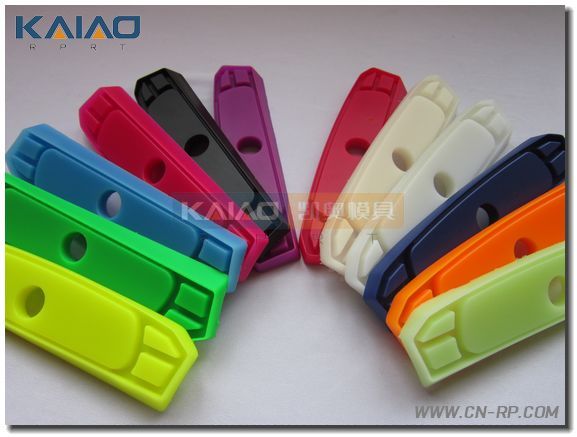
To understand the value of in-mold coloring, it helps to understand the vacuum casting workflow. The process involves several highly controlled steps:
Master Pattern Creation: We first CNC machine or 3D print (SLA) a highly precise master pattern and polish it to the desired surface finish (matte, textured, or high-gloss).
Silicone Mold Making: Liquid silicone is poured around the master pattern and cured to create a precise negative mold.
Pigment Mixing (The Core Step): Before casting, our technicians precisely weigh and mix liquid color pigments directly into the two-part polyurethane resin.
Vacuum Casting: The colored resin is injected into the silicone mold under a vacuum chamber to eliminate any trapped air bubbles, ensuring a flawless, dense part.
Curing and Demolding: Once cured, the part is removed from the mold. Because the color was mixed into the resin, the part emerges with a perfect, uniform color that requires no surface painting.
Why do experienced product designers and engineers choose in-mold coloring over traditional surface painting?
Scratch & Wear Resistance: Because the pigment permeates the entire volume of the polyurethane resin, the color is solid throughout. If the prototype is scratched or dented during rigorous functional testing, the underlying material is the exact same color, making wear virtually invisible.
Faster Lead Times: Eliminating the curing and drying time required for multi-layer painted finishes allows us to deliver your functional prototypes days faster.
Consistent Cosmetic Quality on Flexible Parts: Painting soft or highly flexible parts (like rubber gaskets or wearable straps) often leads to paint cracking or peeling when the part is bent. In-mold coloring ensures a flawless, durable finish even on highly dynamic components.
Cost-Effectiveness: By removing the labor-intensive sanding, masking, and spraying steps associated with traditional painting, we pass the manufacturing savings directly to our clients.
Our vacuum casting coloring technology is highly versatile and can be applied to a wide range of polyurethane (PU) materials to simulate the mechanical properties of mass-production plastics:
1. Soft Elastomers & Rubber (Shore 40A to 90A)We can cast highly flexible, custom-colored soft rubber parts. Whether you need overmolded grips for power tools, custom watertight gaskets, or flexible wearable device straps, our pigmented elastomers maintain their vibrant color without compromising their physical flexibility.
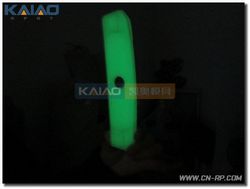
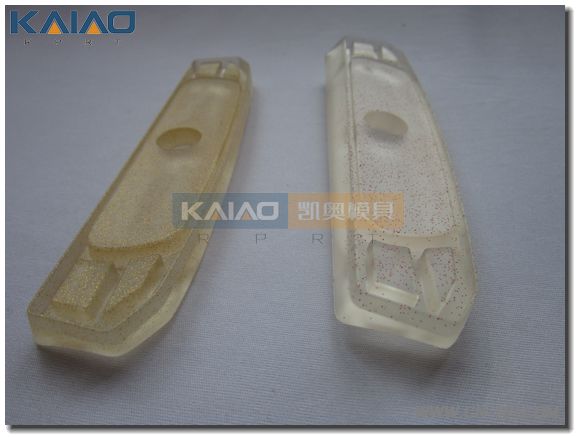
2. Specialty Optical Effects (Glow-in-the-Dark & Translucency)We can incorporate specialty pigments to achieve unique optical properties. As demonstrated in our product gallery, we successfully produce parts that are vibrantly colored during the day and feature glow-in-the-dark (luminescent) properties for low-light applications. We can also create custom tinted translucent parts for light guides and displays.
3. Rigid PC-like & ABS-like MaterialsThe in-mold coloring process is not limited to soft materials. We seamlessly apply custom pigments to rigid Polycarbonate-like (PC) and ABS-like polyurethanes, delivering robust enclosures, medical device housings, and mechanical parts with a premium, factory-finished appearance right out of the silicone mold.
Brand consistency is critical in product development. You do not have to settle for "close enough." At KAIAO, we utilize standard Pantone Matching System (PMS) and RAL color charts to ensure absolute color accuracy. Simply provide us with your target color code, and our color-matching specialists will formulate the exact pigment ratio to replicate your corporate branding perfectly.
In-mold colored vacuum casting is the perfect low-volume manufacturing solution (typically for runs of 10 to 500 units) for several demanding industries:
Medical Devices: Creating soft-touch, colored grips for surgical tools or aesthetic housings that require scratch resistance and chemical wipe-downs.
Consumer Electronics: Prototyping colorful wearable bands, smart home device enclosures, and customized game controller components.
Automotive Interiors: Producing low-volume, textured, and colored dashboard knobs, customized air vent bezels, or flexible seals.
1. Does in-mold coloring affect the strength of the polyurethane material?No. We use highly concentrated, compatible liquid pigments. The mixing ratio is carefully controlled so that it does not alter the tensile strength, flexibility, or thermal properties of the base polyurethane resin.
2. Can you match the surface texture as well as the color?Yes. The vacuum cast part will perfectly replicate the surface texture of the master pattern. Whether you need a high-gloss finish, a smooth matte look, or a specific VDI spark erosion texture, the colored part will emerge from the mold with that exact finish.
3. Are in-mold colored parts UV stable?Standard polyurethanes can yellow slightly over time when exposed to direct sunlight. However, we can add specialized UV stabilizers to the pigmented resin mixture to significantly improve the outdoor weather resistance of your colored prototypes.
4. How fast can I get my colored vacuum cast prototypes?Once the master pattern is approved, we can typically produce and ship low-volume colored vacuum cast batches within 7 to 10 days.
KAIAO’s vacuum casting service bridges the gap between rapid prototyping and mass production. By utilizing our custom in-mold coloring technology, you receive production-quality aesthetic parts without the heavy investment of steel injection molding.
Ready to accelerate your product development? Contact the KAIAO engineering team today, specify your Pantone color requirements, and get a rapid DFM review and quote for your next vacuum casting project.


