

Views: 3 Author: Site Editor Publish Time: 2025-12-17 Origin: Site
The real cost drivers in plastic 3D printing services are primarily material type, part volume and geometry, chosen printing technology, and post-processing requirements. These factors collectively determine the machine time, labor, and material consumption, directly influencing the final price of a 3D printed part, often more significantly than just the raw material cost.
Understanding the true cost of plastic 3D printing services goes beyond a simple per-gram material price. Many factors contribute to the final quote, making it crucial for businesses and individuals to grasp these drivers to optimize their designs and budget effectively. This article will break down the key elements that truly dictate the cost of plastic 3D printing services.
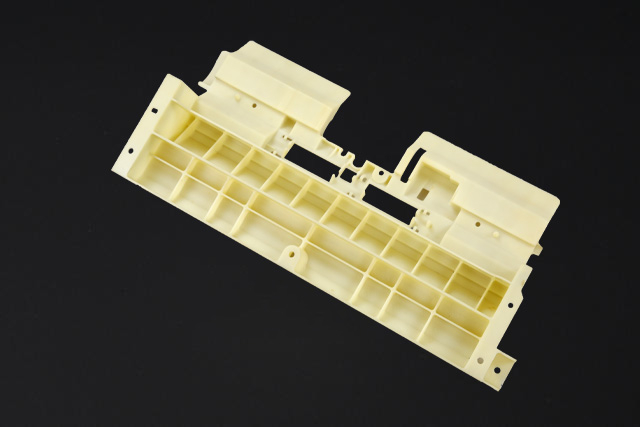
The primary factors affecting 3D printing service costs are material type, part size and complexity, chosen printing technology, and required post-processing. These elements dictate machine time, material consumption, labor for setup and finishing, and the overall overhead, making them the core determinants of the final price for a 3D printed part.
Many assume 3D printing costs are solely based on material weight, but this is a simplification. A comprehensive understanding requires looking at several interconnected variables.
Table: Core Cost Drivers in 3D Printing Services
For example, a small, simple part made from standard PLA on an FDM printer will be significantly cheaper than a large, complex part made from ULTEM on an SLS printer with extensive post-processing. Each factor contributes to the overall cost, and understanding their interplay is key to managing your budget. KAIAO Rapid Manufacturing provides detailed quotes that break down these cost drivers, ensuring transparency for clients.
Material choice significantly impacts 3D printing costs due to varying raw material prices, processing requirements, and machine compatibility. Standard plastics like PLA and ABS are inexpensive, while engineering-grade materials (e.g., Nylon, PC, ULTEM) and specialized resins (e.g., tough, flexible, biocompatible) are considerably more expensive, reflecting their advanced properties and manufacturing complexity.
The cost of 3D printing materials spans a wide range, directly influencing the final service price.
Table: Material Cost Tiers and Examples
For instance, printing a prototype in PLA might cost a few dollars, while the same part in ULTEM could cost hundreds due to the material's inherent expense and the specialized FDM printers required to process it. Similarly, a standard SLA resin is cheaper than a biocompatible medical-grade resin. The material's properties often dictate its price, reflecting the research, development, and manufacturing complexity involved. KAIAO Rapid Manufacturing offers a broad selection of materials, advising clients on the most cost-effective options that meet their project's performance requirements.
Part geometry and volume significantly influence 3D printing costs by determining material consumption, print time, and the need for support structures. Larger parts use more material and machine hours. Complex geometries with intricate details, thin walls, or significant overhangs require more support material, longer print times, and increased post-processing labor for support removal, all driving up the cost.
The physical characteristics of your part are major cost determinants.
Table: Geometry and Volume Cost Impacts
For example, a hollow part with 10% infill will be much cheaper than a solid part of the same dimensions, as it uses less material and prints faster. A part with many intricate overhangs will incur higher costs due to the extra support material and the labor-intensive process of removing it without damaging the part. KAIAO Rapid Manufacturing's DFM (Design for Manufacturability) feedback helps clients optimize part geometry to reduce material usage and print time, thereby lowering costs.
3D printing technology plays a crucial role in cost due to varying machine capital expenditure, material compatibility, operational speeds, and labor requirements. FDM is generally the most affordable for basic parts, while SLS and MJF offer better strength and isotropy at a higher cost. SLA provides high detail but can be more expensive than FDM, and specialized technologies like PEEK/ULTEM FDM carry premium costs due to specialized equipment and materials.
Each 3D printing technology comes with its own cost structure, balancing capabilities with price.
Table: Technology Cost Comparison
For example, if you need a basic, non-critical prototype, FDM will almost always be the cheapest option. However, if you require a complex, strong, and durable part with isotropic properties, SLS or MJF will be more expensive but offer superior performance. The choice of technology is a trade-off between desired part properties, speed, and budget. KAIAO Rapid Manufacturing offers a range of technologies, allowing clients to select the most cost-effective solution for their specific project needs.
Post-processing requirements significantly drive up 3D printing costs because they are often labor-intensive and require specialized skills and equipment. Services like support removal, sanding, polishing, painting, dyeing, and assembly add substantial time and manual effort, which can easily exceed the initial printing cost, especially for parts requiring high aesthetic quality or tight tolerances.
The work doesn't stop when the printer finishes. Post-processing is a critical, often expensive, step.
Table: Post-Processing Cost Impacts
Consider a prototype that needs a perfectly smooth, painted finish. The hours spent on sanding, priming, and painting can easily double or triple the initial print cost. For SLS parts, thorough powder removal is essential, and for SLA parts, post-curing is critical for achieving full material properties. KAIAO Rapid Manufacturing offers comprehensive finishing services, providing clients with options to balance aesthetic and functional requirements with budget constraints.
Hidden costs in 3D printing services can include design for manufacturability (DfM) adjustments, expedited shipping fees, intellectual property protection measures, and potential rework due to unforeseen print failures or design flaws. These costs are often not explicitly quoted upfront but can arise during the project, impacting the overall budget and timeline if not anticipated.
While a quote covers the obvious, some costs might emerge during the project lifecycle.
Table: Potential Hidden Costs
For example, a client might submit a design with walls too thin for the chosen material, requiring a DfM revision that adds design time and cost. Or, a rush order might necessitate expensive overnight shipping. Partnering with an experienced service provider like KAIAO Rapid Manufacturing, which offers DFM support and transparent communication, can help minimize these unforeseen expenses.
You can optimize costs for plastic 3D printing by carefully selecting the material and technology, optimizing part design for additive manufacturing, consolidating orders, and clearly defining post-processing needs. Choosing the least expensive material that meets functional requirements, hollowing parts, minimizing support structures, and only requesting essential finishing services can significantly reduce overall expenses.
Cost optimization is about making informed choices at every stage of the project.
Table: Cost Optimization Strategies
For instance, if a prototype only needs to verify fit, printing it in a cheaper FDM material with minimal infill and no special post-processing will be far more economical than using a high-performance SLS material with extensive finishing. KAIAO Rapid Manufacturing actively works with clients to identify cost-saving opportunities through DFM analysis and flexible service options.
No, 3D printing is not always more expensive than injection molding. For low volumes (typically under 100-1,000 units), 3D printing is often more cost-effective due to lower tooling costs. For high volumes, injection molding becomes significantly cheaper per part.
Material costs are high for some 3D printing plastics due to specialized polymer formulations, extensive R&D, lower production volumes compared to commodity plastics, and the need for specific processing equipment. High-performance materials like ULTEM offer unique properties that justify their premium price.
Yes, infill percentage significantly affects the cost of an FDM 3D print. Higher infill percentages use more material and increase print time, directly leading to higher costs. For non-structural parts, a lower infill (e.g., 10-20%) can drastically reduce expenses.
Yes, providing a clean, print-ready CAD file (e.g., STL) can reduce costs. Service providers often charge for file repair or optimization if your file has errors or isn't suitable for printing. A well-prepared file minimizes their labor.
Part orientation affects 3D printing cost by influencing the amount of support material needed, the total print time, and the surface finish. An optimized orientation can minimize supports and print time, thereby reducing material usage, labor for support removal, and overall cost.
The real cost drivers in plastic 3D printing services are multifaceted, extending far beyond just the raw material price. Material type, part volume and geometry, the chosen printing technology, and post-processing requirements are the most significant factors. Understanding these elements allows for informed decision-making and effective cost optimization.
By strategically selecting materials and technologies, optimizing designs for additive manufacturing, and carefully defining post-processing needs, businesses can significantly reduce their 3D printing expenses. Partnering with an experienced service provider like KAIAO Rapid Manufacturing, which offers transparent pricing, DFM support, and a range of technologies, is crucial for navigating these cost drivers and achieving the best value for your plastic 3D printing projects.


