


Views: 4 Author: Site Editor Publish Time: 2026-01-12 Origin: Site
Transitioning from a single prototype to a pilot run of 50 units is a high-risk "no man's land." Procurement managers often overspend on steel molds too early or settle for weak 3D prints. Choosing between Vacuum Casting and Rapid Injection depends on balancing part complexity, material requirements, and your specific unit count to avoid wasted capital.
At Kaiao Rapid Manufacturing, we’ve spent over 20 years helping engineers navigate the gap between a "works-like" model and a "market-ready" product. The decision between silicone tooling (Vacuum Casting) and aluminum tooling (Rapid Injection) isn't just about cost—it’s about how much data you need from your test batch. This guide breaks down the technical nuances to help you choose the right path for your next Rapid Prototyping project.
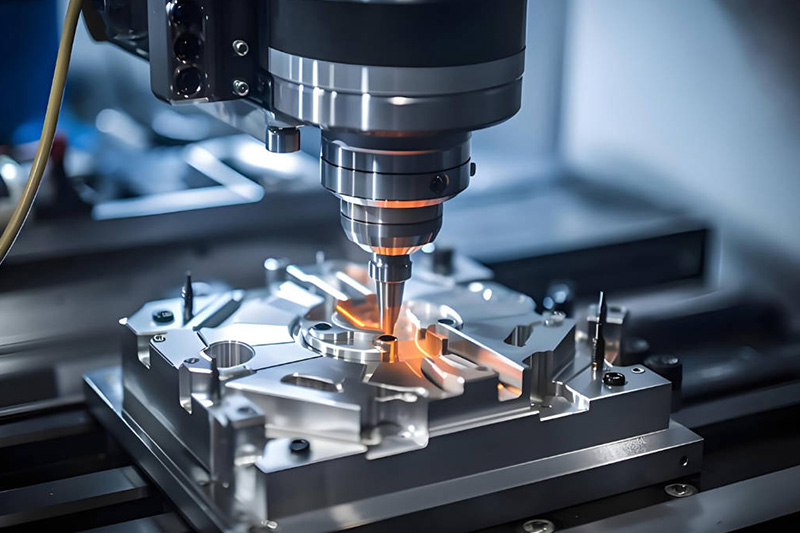
Most hardware failures happen because the "pilot run" was skipped. Moving directly from a CNC prototype to a $20,000 steel mold is a gamble. Bridge production—producing 10 to 500 units—allows you to perform field testing and user validation without the massive overhead.
Bridge production utilizes soft tooling methods like Vacuum Casting or Rapid Injection to produce high-fidelity parts for functional testing. This phase identifies assembly issues and material failures early, ensuring that the final "frozen" design is optimized for expensive high-volume injection molding.
When you need a handful of parts that look and feel like the final product, Vacuum Casting (Urethane Casting) is the most efficient choice. At KAIAO-RPRT, we use this for batches of up to 20 units.
Vacuum Casting is ideal for complex geometries and large parts, such as automotive dashboards or intricate interior components. By using a 3D-printed master pattern to create a silicone mold, we can achieve a tolerance of ±0.05 mm and deliver finished parts within approximately 15 days.
Best for: Overmolding, complex undercuts, and color matching (Pantone/RAL).
Example: A car manufacturer needing 15 dashboard vents for a pre-production display car.
If your part needs to survive a drop test or a high-heat environment, you need production-grade thermoplastics. Rapid Injection uses aluminum or "soft" steel molds to bridge the gap.
Rapid Injection is the preferred choice when you need 50 to 500+ units made from production-grade materials like ABS, PC, or PEEK. With a mold lead time of 5 to 15 days, it offers higher repeatability and tighter tolerances (±0.02–0.05 mm) compared to casting, making it essential for functional robotics and medical device testing.
In precision industries like medical or aerospace, the difference between ±0.05 mm and ±0.02 mm is the difference between a functional assembly and a pile of scrap.
Rapid Injection offers superior dimensional stability and repeatability because the rigid aluminum mold does not deform under pressure. While Vacuum Casting is excellent for aesthetic models (±0.05 mm), Rapid Injection provides the precision (±0.02–0.05 mm) required for critical interlocking components in consumer electronics and medical devices.
The "tipping point" between these two technologies is usually found in the volume.
This is the most common area of confusion for procurement managers. Vacuum casting uses Polyurethane (PU) resins formulated to mimic plastics like ABS or Rubber. Rapid Injection uses the actual plastic pellets used in mass production.
No. While PU resins are excellent for "look-and-feel" validation, they often lack the long-term UV stability, chemical resistance, and fatigue strength of production thermoplastics. If your part requires rigorous mechanical stress testing, Rapid Injection with production-grade materials is the only way to get reliable data.
At KAIAO, we’ve applied these technologies across diverse sectors:
Automotive: We used Vacuum Casting to produce a small batch of complex interior trim components for a concept vehicle, focusing on leather-like textures and specific color finishes.
Medical Devices: We employed Rapid Injection for a handheld diagnostic tool housing. The client needed 200 units for clinical trials. The aluminum mold ensured every unit was identical, meeting strict medical regulatory tolerances.
Consumer Electronics: For a new VR headset, we used Rapid Injection to test the durability of the "snap-fit" battery cover, something a cast resin part couldn't accurately simulate.
To make the right choice for your Rapid Prototyping project, ask yourself these three questions:
Do I need the actual production material? If yes, go with Rapid Injection.
Is the geometry extremely complex with deep undercuts? If yes, Vacuum Casting is likely more cost-effective.
What is my total quantity? * < 20 units: Vacuum Casting.
50 - 1000 units: Rapid Injection.
Both Vacuum Casting and Rapid Injection are powerful tools in a developer's arsenal. At KAIAO, our 3,000-square-meter facility is equipped with over 100 specialists to help you analyze your 3D files and choose the path that minimizes risk while maximizing speed to market.
Would you like me to provide a cost-comparison quote for your current project using both Vacuum Casting and Rapid Injection methods?


