

Views: 4 Author: Site Editor Publish Time: 2026-01-06 Origin: Site
Testing a flawed design in mass production is a catastrophic financial drain. Many product managers struggle with high scrap rates and delayed launches because they skipped functional validation. Rapid prototyping (CNC and 3D printing) mitigates this risk by identifying mechanical failures early, ensuring design intent matches physical reality before tooling investment.
In my 20+ years at the helm of Kaiao Rapid Manufacturing, I’ve seen multimillion-dollar projects hinge on a single millimeter of clearance. The transition from a CAD model to a physical part is where most "hidden" risks live. This article explores how we use CNC machining and 3D printing to bridge that gap and protect your ROI.
Product designers often face the "Rule of 10": an error found in the design phase costs $1 to fix; in the prototyping phase, $10; but after opening a steel injection mold, that cost can skyrocket to $1,000 or more in rework and lost time.
Rapid prototyping serves as a high-fidelity physical audit that identifies interference issues, ergonomic failures, and material weaknesses. By investing in a functional prototype, engineers can validate the "Form, Fit, and Function" of a component, effectively neutralizing the risk of expensive downstream tooling modifications.
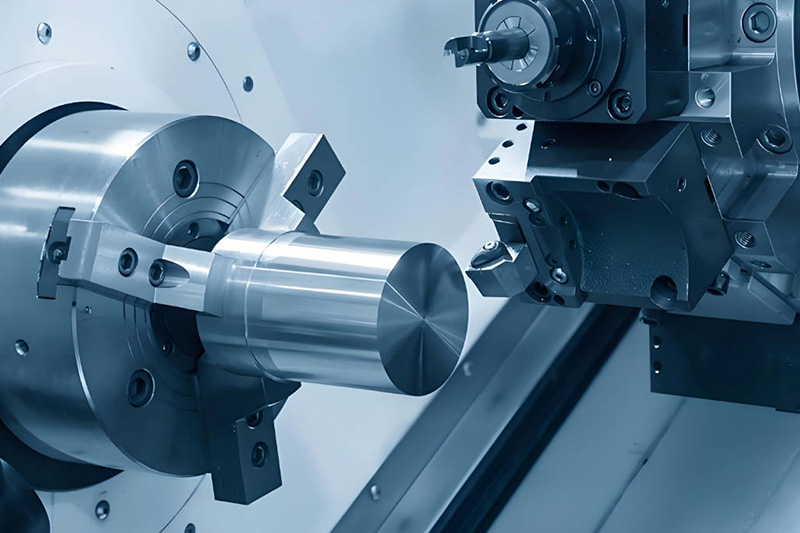
In automotive engineering, a clearance error of 0.5 mm in a gearbox housing can lead to catastrophic oil leaks. At KAIAO-RPRT, we utilize CNC machining with tolerances of ±0.001 inch to create engine-grade prototypes. This allows engineers to perform actual thermal and vibration stress tests that a 3D model simply cannot simulate.
When your project requires structural integrity and specific material properties, 3D printing often falls short. This is where CNC machining becomes the gold standard for risk reduction.
Yes, CNC machining utilizes the exact production-grade metals and plastics intended for the final product, allowing for rigorous mechanical testing. With KAIAO’s ability to handle workpieces up to 4000×1500×600 mm, we provide engineers with full-scale, functional parts that mirror the final product’s performance characteristics.
While 3D printing is faster for complex shapes, CNC machining is unrivaled for precision. At our 3,000 sqm facility, we maintain a standard delivery time of 1 day for simple CNC parts. For a procurement manager, this means you don't have to sacrifice your schedule to get a part that actually works.
Example 1: Aerospace structural components where grain structure and tensile strength are non-negotiable.
Example 2: Medical device enclosures requiring biocompatible plastics like PEEK or Ultem.
3D printing is the "first responder" of rapid prototyping. It allows for the exploration of complex geometries that would be impossible or prohibitively expensive to machine.
3D printing allows designers to hold a physical version of their concept within days, enabling immediate ergonomic and aesthetic feedback. At KAIAO, our 3D printing services cover dimensions up to 1400×700×500 mm with a 4-6 day turnaround, drastically shortening the initial feedback loop in consumer electronics.
Consumer Electronics: Iterating the "hand-feel" of a smartphone case or wearable device.
Complex Ducting: Validating airflow in aerospace components where internal channels are too intricate for traditional drills.
Modern manufacturing isn't an "either/or" choice between CNC and 3D printing. The most efficient development cycles use both.
The hybrid approach involves 3D printing complex, non-load-bearing aesthetic housings while CNC machining the internal mechanical chassis. This strategy balances the speed and geometric freedom of additive manufacturing with the precision and strength of subtractive machining, ensuring the assembly functions as intended without bloating the R&D budget.
Selecting the wrong material for a prototype is a common pitfall. If you test a clip-fit design using a brittle 3D printing resin when the final part will be Polypropylene (PP), the test is invalid.
A prototype is only as good as the data it produces. Using production-equivalent materials ensures that friction, heat dissipation, and impact resistance are accurately represented. KAIAO-RPRT provides a massive library of materials, ensuring that your prototype’s behavior aligns with your final injection-molded or cast parts.
For B2B procurement, the two most important variables are "When will I get it?" and "Will it fit?".
High-precision prototyping requires CNC tolerances of ±0.001 inch and sheet metal cutting tolerances of ±0.00787 inch. Providing these tight tolerances ensures that when multiple prototype parts are assembled, they don't suffer from "tolerance stack-up," which can lead to false failures during the verification stage.
Once the single prototype is validated, the next risk is "process consistency." Before jumping to high-volume injection molding, we recommend Vacuum Casting.
Vacuum casting allows for the production of up to 20 high-quality parts within 15 days using silicone molds. This is ideal for pilot runs, marketing samples, or clinical trials, providing a low-cost way to test the market and refine the design before committing to expensive steel tooling.
Since 1995, KAIAO has supported thousands of projects from our 3,000 sqm facility. Based on that experience, here is what you should look for in a partner:
In-house Equipment: Do they actually own the 3-axis and 5-axis CNC machines?
Engineering Depth: Do they have a team (like our 100+ specialists) to suggest DFM (Design for Manufacturing) improvements?
Industry Experience: Have they worked in your specific sector (e.g., Medical, Aerospace)?
Speed vs. Precision: Can they meet a 1-day turnaround without sacrificing the ±0.001 inch tolerance?
Shortening product development is about more than just speed; it’s about the accuracy of the information you gather at each stage. By leveraging CNC for precision and 3D printing for speed, you can move from concept to a market-ready product with minimal financial exposure.
Would you like me to review your CAD files for a DFM (Design for Manufacturing) analysis to see which process fits your current project phase?


