


Views: 3 Author: Site Editor Publish Time: 2025-12-22 Origin: Site
Neither plastic 3D printing nor CNC machining is universally "better" for prototyping; the optimal choice depends on the prototype's specific requirements for material properties, geometric complexity, surface finish, and budget. 3D printing excels in speed, design freedom, and cost-effectiveness for complex, low-volume parts, while CNC machining offers superior material strength, tighter tolerances, and smoother finishes for simpler, high-precision prototypes.
Choosing between plastic 3D printing and CNC machining for prototyping is a critical decision that impacts development time, cost, and the quality of your final product. Both technologies offer distinct advantages and disadvantages, making it essential to understand their core differences to select the best method for your specific project needs. This article will provide a comprehensive comparison to guide your decision.
What Are the Core Differences Between 3D Printing and CNC Machining?
How Do Material Properties Compare Between 3D Printing and CNC Machining?
The core differences between 3D printing and CNC machining lie in their manufacturing processes: 3D printing is an additive process that builds parts layer by layer, while CNC machining is a subtractive process that removes material from a solid block. This fundamental distinction impacts material usage, geometric capabilities, surface finish, and the mechanical properties of the final prototype.
Understanding these opposing approaches is key to appreciating their respective strengths and weaknesses.
Table: Fundamental Differences
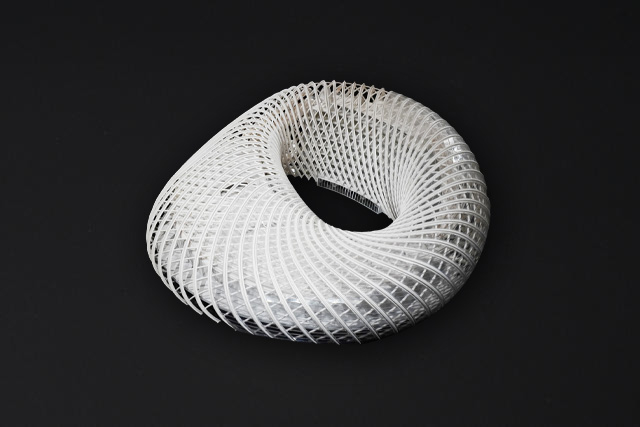
For example, 3D printing can easily create a hollow sphere with internal lattice structures, which would be impossible or extremely difficult for CNC machining. Conversely, CNC machining can produce a perfectly flat, smooth surface with very tight tolerances that 3D printing struggles to match without extensive post-processing. KAIAO Rapid Manufacturing offers both services, guiding clients to the most appropriate method based on their specific prototype needs.
Plastic 3D printing is better for prototyping when design freedom, rapid iteration, and cost-effectiveness for complex geometries are paramount. It excels for early-stage concept models, functional prototypes with intricate internal features, parts requiring minimal tooling investment, and projects with tight deadlines where quick turnaround is essential for design validation.
3D printing shines in scenarios where its unique capabilities offer significant advantages.
Table: Ideal Scenarios for Plastic 3D Printing
For a startup developing a new consumer electronic device, 3D printing allows them to quickly print and test multiple iterations of the housing design, refining ergonomics and internal component fit without significant upfront investment. KAIAO Rapid Manufacturing specializes in rapid prototyping, offering various 3D printing technologies to meet diverse design and functional requirements.
CNC machining is better for prototyping when high material strength, tight tolerances, superior surface finish, and the use of production-grade materials are critical. It is ideal for functional prototypes requiring precise dimensions, smooth aesthetics, or those made from engineering plastics that need to mimic end-use part performance, especially for simpler, more prismatic geometries.
CNC machining is the go-to for prototypes demanding high fidelity to production parts.
Table: Ideal Scenarios for CNC Machining
For an aerospace company prototyping a critical structural component, CNC machining from a solid block of PEEK or ULTEM ensures the prototype accurately reflects the mechanical properties and tolerances of the final production part. KAIAO Rapid Manufacturing provides high-precision CNC machining services for prototypes requiring superior strength, accuracy, and surface quality.
Material properties in CNC machining generally offer superior isotropy, higher density, and a broader range of production-grade plastics compared to 3D printing. CNC parts are machined from solid blocks, ensuring consistent strength in all directions. 3D printed parts, especially FDM, can exhibit anisotropy (directional weakness) and may have lower density due to layer lines or internal porosity, though advanced 3D printing materials and processes are closing this gap.
The way a part is made fundamentally alters its material characteristics.
Table: Material Property Comparison
For example, a CNC machined ABS part will typically be stronger and more consistent in its mechanical properties than an FDM 3D printed ABS part, especially under stress perpendicular to the print layers. However, advanced 3D printing technologies like SLS with Nylon 12 can produce parts with mechanical properties very close to injection-molded parts. KAIAO Rapid Manufacturing helps clients select the optimal material and process to achieve the desired mechanical performance for their prototypes.
3D printing offers significantly greater geometric complexity and design freedom than CNC machining, allowing for intricate internal structures, organic shapes, and undercuts without additional cost or setup. CNC machining is limited by tool access and movement, making it best suited for more prismatic and geometric shapes, often requiring multiple setups or specialized tools for complex features.
The manufacturing method directly impacts what designs are feasible.
Table: Geometric Capabilities Comparison
Imagine a heat exchanger with complex internal fluid channels. This would be a perfect application for 3D printing. In contrast, a simple rectangular enclosure with precise mounting holes would be ideal for CNC machining. KAIAO Rapid Manufacturing leverages the strengths of both technologies, advising on design optimization to achieve the desired geometry efficiently.
3D printing generally offers lower upfront costs and faster lead times for single prototypes or low volumes due to no tooling requirements and quick setup. CNC machining has higher initial setup costs and longer lead times for complex parts due to programming and fixturing, but it becomes more cost-effective for higher volumes or when extreme precision and specific material properties are critical.
Cost and time are often the deciding factors in prototyping.
Table: Cost and Lead Time Comparison
For a single, intricate prototype needed tomorrow, 3D printing is the clear winner. If you need 50 highly precise, strong plastic parts for a pilot run next month, CNC machining might be more cost-effective per part, despite the longer initial setup. KAIAO Rapid Manufacturing provides rapid quotations and flexible lead times for both 3D printing and CNC machining, helping clients manage their project budgets and schedules.
CNC machining typically delivers superior surface finish and tighter tolerances directly from the machine compared to 3D printing. Machined parts have smooth, consistent surfaces and can achieve tolerances as low as ±0.025mm. 3D printed parts often exhibit visible layer lines and generally have looser tolerances (e.g., ±0.1mm to ±0.5mm), requiring extensive post-processing to achieve comparable smoothness or precision.
The final look and fit of a prototype are often critical.
Table: Surface Finish and Tolerance Comparison
For a prototype that needs to fit perfectly into an assembly or have a high-gloss, production-like appearance, CNC machining is usually the preferred method. While 3D printed parts can be post-processed to achieve a smooth finish, this adds significant time and cost. KAIAO Rapid Manufacturing offers comprehensive finishing services for both 3D printed and CNC machined parts to meet specific aesthetic and tolerance requirements.
Yes, 3D printing and CNC machining can be effectively used together in a hybrid approach to leverage the strengths of both technologies for prototyping. This often involves 3D printing complex internal structures or initial forms, followed by CNC machining external surfaces for precision, tight tolerances, and superior finish, creating highly optimized and functional prototypes.
Combining additive and subtractive methods can yield superior results.
Table: Hybrid Prototyping Applications
For a complex medical device, 3D printing could create the intricate internal fluidic channels, while CNC machining would then precisely mill the external housing and critical connection points, ensuring both functionality and aesthetic quality. KAIAO Rapid Manufacturing offers integrated solutions, combining 3D printing and CNC machining to deliver optimized prototypes that meet the most demanding specifications.
Generally, yes, 3D printing is cheaper than CNC machining for a single prototype, especially for complex geometries. This is because 3D printing has no tooling costs and lower setup times compared to CNC machining.
CNC machining generally offers a broader selection of production-grade engineering plastics (e.g., PEEK, Delrin, Nylon, ABS, PC) that are readily available as solid blocks. While 3D printing's material range is growing, it still has limitations compared to the vast array of machinable plastics.
No, 3D printed parts typically do not achieve the same strength as CNC machined parts, especially in terms of isotropy and density. CNC parts, being machined from solid blocks, have superior and more consistent mechanical properties. However, advanced 3D printing (SLS, MJF) can produce parts with properties close to injection molding.
3D printing is significantly faster for design iterations. Changes to a CAD model can be printed within hours or days, allowing for rapid testing and refinement, whereas CNC machining requires more time for reprogramming and setup.
You should use CNC machining for plastic prototypes when high material strength, tight tolerances, superior surface finish, and the use of specific production-grade materials are critical for functional validation or aesthetic representation.
Choosing between plastic 3D printing and CNC machining for prototyping is not about one being inherently "better," but about selecting the method that best aligns with your prototype's specific requirements. 3D printing excels in speed, design freedom for complex geometries, and cost-effectiveness for low volumes. CNC machining offers superior material strength, tighter tolerances, and a production-like surface finish for simpler, high-precision parts.
Often, the most effective approach is a hybrid strategy, leveraging 3D printing for initial concept validation and complex internal features, then utilizing CNC machining for critical external surfaces or final functional prototypes requiring high precision. By understanding the distinct advantages of each technology, you can make an informed decision that optimizes your product development cycle. KAIAO Rapid Manufacturing provides expertise in both plastic 3D printing and CNC machining, offering tailored solutions to meet your prototyping needs.


