


Views: 2 Author: Site Editor Publish Time: 2025-12-13 Origin: Site
You should choose plastic 3D printing over traditional manufacturing primarily for rapid prototyping, complex geometries, low-volume production, and custom parts, as it offers unparalleled speed for iterations, design freedom, and cost-effectiveness without expensive tooling. Traditional methods like injection molding or CNC machining become more suitable for high-volume production, simpler designs, or when specific material properties are paramount.
In the dynamic landscape of product development, choosing the right manufacturing method is crucial. While traditional techniques like injection molding and CNC machining have long been the backbone of production, plastic 3D printing (additive manufacturing) has emerged as a powerful alternative, especially for specific applications. Understanding when to leverage 3D printing's unique advantages over conventional methods can significantly accelerate your development cycle, reduce costs, and unlock new design possibilities. This article will explore the scenarios where plastic 3D printing truly shines.
When Is Plastic 3D Printing Faster for Prototyping and Iteration?
What Role Does Customization and Low-Volume Production Play?
The core advantages of plastic 3D printing include unparalleled design freedom for complex geometries, rapid turnaround times for prototypes and iterations, minimal tooling costs, and the ability to produce highly customized or low-volume parts efficiently. These benefits make it ideal for accelerating product development, reducing risk, and creating innovative designs that are difficult or impossible with traditional methods.
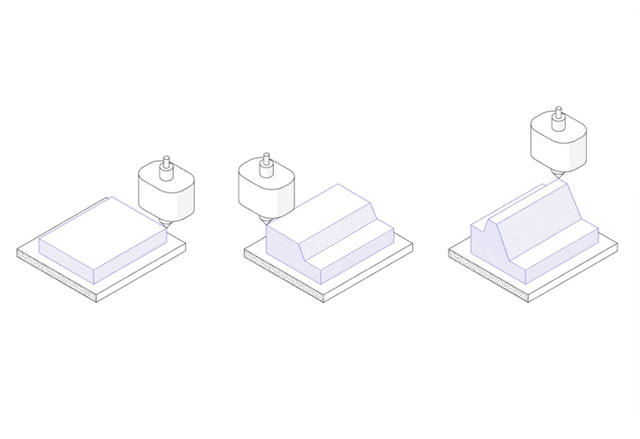
Plastic 3D printing fundamentally changes how parts are made, building them layer by layer rather than removing material or using molds. This additive approach offers distinct benefits.
Table: Core Advantages of Plastic 3D Printing
For example, imagine designing a lightweight drone frame with internal lattice structures for optimal strength-to-weight ratio. This kind of intricate design would be impossible or prohibitively expensive to produce with injection molding or CNC machining, but it's a perfect fit for plastic 3D printing. The ability to quickly print and test multiple iterations of such a design allows engineers to optimize performance rapidly.
KAIAO Rapid Manufacturing leverages 3D printing for complex geometries, quick iterations, and low-volume needs. This capability allows clients to explore innovative designs and validate concepts rapidly, taking full advantage of the design freedom and speed that additive manufacturing offers.
Plastic 3D printing is significantly faster for prototyping and iteration when you need physical parts in days, allowing for rapid design validation and multiple revisions without the delays of tooling. Traditional methods like injection molding require weeks or months for mold fabrication, making 3D printing the superior choice for accelerating early-stage product development and reducing time-to-market.
The speed of getting a physical part from a digital design is where 3D printing truly excels, especially in the early stages of product development.
Table: Speed Comparison for Prototyping
Consider a product designer who needs to test the ergonomics of a new handheld device. With 3D printing, they can print several variations of the grip in a single day, quickly identify the most comfortable design, and move forward. If they had to rely on traditional manufacturing, each iteration would require a new mold or extensive CNC machining, taking weeks and incurring significant costs, effectively stifling rapid experimentation.
The ability to go from a CAD model to a physical prototype in a matter of hours or days means that engineers can test, learn, and refine their designs at an unprecedented pace. This rapid iteration cycle is invaluable for identifying design flaws early, optimizing functionality, and ensuring the final product meets all requirements before committing to expensive production tooling. KAIAO Rapid Manufacturing utilizes 3D printing specifically for quick iterations, enabling clients to accelerate their R&D processes and validate designs efficiently.
Part complexity heavily influences the choice, with plastic 3D printing being superior for intricate, organic, or internal geometries that are difficult or impossible to produce with traditional manufacturing. Traditional methods like injection molding or CNC machining face significant cost and time increases with complexity, often requiring multi-part molds or extensive machining, whereas 3D printing handles complexity with relative ease and no additional cost.
Traditional manufacturing methods often penalize complexity with higher costs and longer lead times. 3D printing, however, thrives on it.
Table: Complexity vs. Manufacturing Method
Consider a custom medical implant designed to perfectly fit a patient's unique anatomy, featuring intricate internal channels for fluid flow. Such a part would be impossible to produce with injection molding and extremely challenging and expensive with CNC machining. 3D printing, however, can create this complex, patient-specific geometry directly from a CAD scan, making it the only viable manufacturing method.
Similarly, engineers designing fluidic manifolds or heat exchangers can leverage 3D printing to create optimized internal geometries that maximize performance, something that would be impossible to achieve with conventional methods. The ability to produce complex parts without incurring additional cost or time penalties for complexity is a major differentiator for plastic 3D printing. KAIAO Rapid Manufacturing highlights 3D printing as ideal for complex geometries, enabling clients to push the boundaries of design.
Plastic 3D printing is more cost-effective for low-volume production (typically under 100-200 units), prototypes, and custom parts because it eliminates expensive tooling costs associated with traditional manufacturing. While its per-part cost might be higher than injection molding for mass production, the absence of upfront mold expenses makes it significantly cheaper for small batches, enabling rapid, budget-friendly development and market testing.
Cost-effectiveness isn't just about the price per part; it's about the total cost of ownership for a given production volume and project stage.
Table: Cost-Effectiveness Comparison
For a startup needing 50 units of a specialized bracket for a pilot program, the upfront cost of an injection mold (which could be 5,000−5,000-5,000−20,000) would make traditional manufacturing prohibitively expensive. 3D printing, with no tooling cost, would allow them to produce these 50 parts for a fraction of that initial investment, making it the far more cost-effective choice.
Even for functional prototypes, the ability to avoid expensive tooling for each design iteration means that the overall cost of developing and refining a product can be significantly lower with 3D printing. This allows companies to validate designs, reduce risks, and control early-stage costs more effectively. KAIAO Rapid Manufacturing offers 3D printing for low-volume needs, providing a cost-efficient solution for clients who need small batches without the burden of high tooling expenses.
Customization and low-volume production are key drivers for choosing plastic 3D printing, as it allows for the efficient creation of unique, personalized, or small batches of parts without the economic penalties of traditional tooling. This makes it ideal for bespoke products, specialized tools, medical devices, and bridge manufacturing where traditional methods are too costly or inflexible for limited runs.
The ability to produce unique items or small quantities economically is a game-changer for many industries.
Table: Customization & Low-Volume Production
Consider the field of prosthetics, where each device must be custom-fitted to an individual. 3D printing allows for the rapid and cost-effective production of personalized prosthetic sockets or covers, tailored precisely to the patient's anatomy. This level of customization would be impossible with traditional manufacturing methods without incurring astronomical costs.
Similarly, for companies launching a new product with uncertain market demand, 3D printing offers a way to produce an initial batch of 50-100 units for market testing without committing to expensive injection molding tools. This "bridge production" strategy allows them to gauge interest and refine the product before scaling up. KAIAO Rapid Manufacturing offers 3D printing for low-volume needs, supporting industries that require flexibility and cost-efficiency for small batches.
Material properties are a deciding factor for choosing plastic 3D printing when specific engineering-grade plastics are available that meet the functional requirements for prototypes or low-volume end-use parts, such as strength, flexibility, or heat resistance. While traditional manufacturing offers a broader range of materials and often superior mechanical properties for mass production, 3D printing's expanding material palette now supports many applications where specific performance is critical without the need for tooling.
The performance of a part is often dictated by its material. While 3D printing's material options are growing, there are still considerations.
Table: Material Properties Comparison
For example, if you need a prototype that requires high impact resistance and good ductility, a 3D printing process like SLS (Selective Laser Sintering) with Nylon 12 powder can produce parts with excellent mechanical properties, closely mimicking injection-molded Nylon. Similarly, for flexible prototypes, materials like TPU (Thermoplastic Polyurethane) can be 3D printed to achieve specific shore hardness and elasticity.
However, if your application demands extreme heat resistance, specific chemical inertness, or very high fatigue strength that can only be achieved with specialized, highly filled, or reinforced thermoplastics, traditional injection molding might still be the more reliable choice, as it can process a broader array of these advanced materials with optimized properties. The key is to assess if the available 3D printable materials meet your specific functional requirements for the given stage of development. KAIAO Rapid Manufacturing offers 3D printing with various materials, allowing clients to select the best fit for their functional prototypes.
You should stick with traditional manufacturing methods like injection molding or CNC machining when producing high volumes (thousands to millions), requiring the lowest per-part cost, or demanding superior mechanical properties and surface finishes from a wider range of materials. Traditional methods are also preferred for simpler geometries where tooling costs are justified by scale, or when specific industry certifications for materials and processes are non-negotiable for end-use parts.
Despite the rise of 3D printing, traditional manufacturing methods remain indispensable for many applications, particularly at scale.
Table: When Traditional Manufacturing is Preferred
For example, producing millions of plastic bottle caps or automotive interior components would be economically unfeasible with 3D printing due to higher per-part costs and slower production rates. Injection molding, with its rapid cycle times and low material costs at scale, is the undisputed champion for such applications.
Similarly, if a critical aerospace component requires the absolute highest strength, fatigue resistance, and specific material certifications, CNC machining from a solid block of engineering plastic or injection molding with a certified material would be the preferred choice, as these methods often yield parts with superior and more predictable mechanical performance compared to 3D printed alternatives. KAIAO Rapid Manufacturing offers both injection molding and CNC machining for high-precision, high-volume, and engineering-grade plastic parts, ensuring clients have access to the most suitable method for their specific production needs.
No, 3D printing is not always cheaper. It is more cost-effective for low-volume production (typically under 100-200 units), prototypes, and custom parts due to zero tooling costs. However, for high-volume production (thousands to millions), traditional methods like injection molding become significantly cheaper per part.
It depends on the material and 3D printing process. Some advanced 3D printing processes (e.g., SLS with Nylon) can produce parts with mechanical properties comparable to injection-molded parts, especially for certain applications. However, injection molding generally offers superior isotropic strength and density for a wider range of materials.
3D printing is significantly faster for prototypes. You can often get a 3D printed prototype in hours to a few days. Traditional methods like injection molding require weeks to months for mold fabrication before the first part can be produced.
Yes, 3D printing is increasingly suitable for end-use parts, especially for customized products, low-volume production, spare parts, and complex geometries where its advantages outweigh the benefits of traditional manufacturing. The range of engineering-grade 3D printable plastics is constantly expanding.
You should definitely NOT use 3D printing for plastic parts when you need to produce thousands to millions of units, require the absolute lowest per-part cost, or demand the highest mechanical strength, perfect isotropy, and specific material certifications that are best achieved through traditional high-volume manufacturing processes like injection molding.
Choosing between plastic 3D printing and traditional manufacturing methods is a strategic decision that hinges on your project's specific requirements. Plastic 3D printing excels when you need rapid prototyping, design freedom for complex geometries, cost-effectiveness for low-volume production, and high customization. It's the ideal choice for accelerating early-stage development, iterating quickly, and bringing innovative, intricate designs to life without the burden of expensive tooling.
Conversely, traditional manufacturing, particularly injection molding, remains the undisputed champion for high-volume production, achieving the lowest per-part cost, and delivering superior mechanical properties and surface finishes from a vast array of materials.
By understanding these distinct strengths, you can make an informed decision that optimizes speed, cost, and quality for your product development. KAIAO Rapid Manufacturing offers a comprehensive suite of services, including both advanced 3D printing and traditional manufacturing techniques like CNC machining and injection molding, ensuring you have access to the most suitable process for every stage of your product's lifecycle.


